When the doors to the Ocie Hill Center finally closed in 2020, the North End didn’t just lose a building. It lost a gathering place, a workout space, an after-school hub, a site for social services, a gym, a place where little kids learned to read and teenagers learned to play basketball.
The city-owned building had served the public for more than a century. It had been a school, an Opportunities Industrial Center, a home for nonprofits and a recreation anchor. Its closure hit hard. Residents packed council meetings to protest the loss. Community leaders pointed to a long-standing pattern—resources disappearing in the North End with no true return.
Deanna West-Torrence, founder and then executive director of the North End Community Improvement Collaborative (NECIC), said what many felt: the closure created an immediate gap in care, safety, youth space, health access and basic dignity. What the neighborhood needed most was not nostalgia—it was reinvestment.
“It should be something that meets the many needs of the community and has a positive impact on property values,” West-Torrence said, noting the hope for health care, education, workforce development and recreation to return to the neighborhood.
That desire wasn’t theoretical. It was a lived experience. One of NECIC’s own staff members, who grew up at Ocie Hill, called seeing its neglect “heartbreaking,” remembering daily childhood summers there and leadership opportunities as a teen.
So the question became: If the community lost a public commons, what would it take to build one back—better, closer and designed for the next generation?
The North End decides it won’t wait for someone else to save it
NECIC already had a responsibility in the neighborhood:
- advocate for residents who felt unseen
- elevate youth and elders
- fight stigma
- remove barriers to resources
Internally, the organization described itself as a “watch guard” and “intercessor for those without knowledge or power to defend”—from the elderly to the politically disconnected.
The downtown offices were polished and impressive, but the location wasn’t matching the mission. And North Enders didn’t typically go downtown.
The new building needed to resolve that contradiction. It needed to be beautiful, but familiar. High-functioning, but not institutional. “Walking into family—not sterile,” one stakeholder said.
And above all, it needed to belong to residents—not signal that help was only available elsewhere.
The solution wasn’t a blueprint—it was a neighborhood voice
NECIC didn’t begin with sketches. They began with listening.
Thirty-plus stakeholder interviews surfaced emotional realities and practical needs:
- privacy for “a place to cry” or handle sensitive conversations
- visibility and collaboration so staff could see each other and feel safe
- mental health counseling
- boxing and youth sports
- medical services
- rentable partner space
- arts
- recreation
- a commercial kitchen for learning, meals, events and business
Residents wanted something “owned by the neighborhood,” something that would “spark investment” and “raise expectations” for the area.
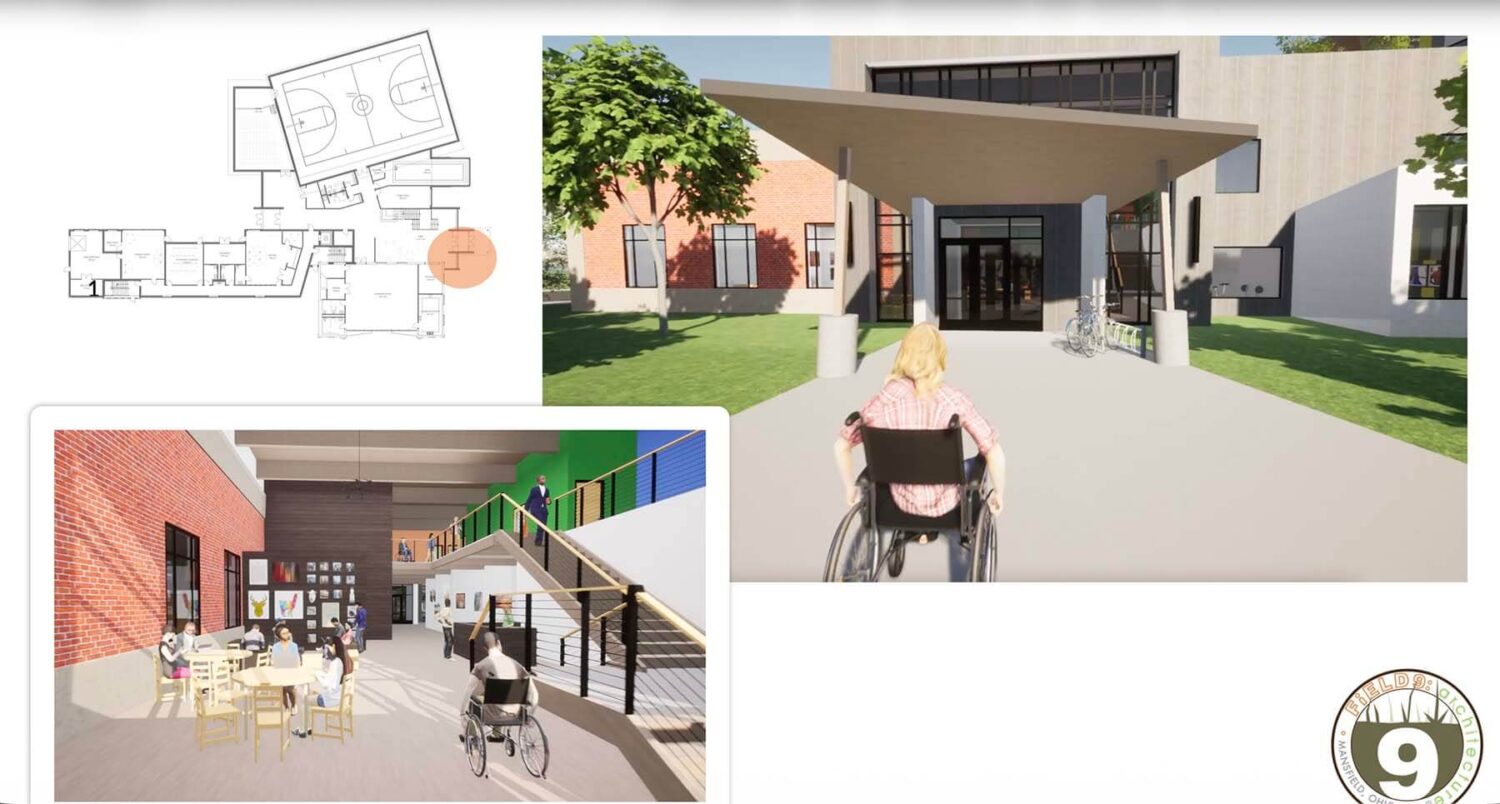
They wanted natural light, outdoor green space, gardens, color—an environment that felt safe and hopeful.
Before any design decision was made, the mandate was already clear:
This was not a building project. This was a community-building project.
FiELD9 enters—to listen and guide the process
NECIC needed an architect who understood why a building mattered—not just how.
FiELD9 was chosen because the firm worked differently: a passive-build, human-centered approach. It centered around limiting energy waste, prioritizing high-insulation envelopes, daylighting, electrification, and materials that reduced long-term cost to people and the planet.
The firm embraced NECIC’s goals for environmental resilience. The project signified a “new era of reinvestment” and emphasized its commitment to Passive Building certification, photovoltaics and rainwater harvesting as a reflection of NECIC’s—and the neighborhood’s—resilience.
FiELD9 didn’t dictate solutions. They asked questions:
- How do we make energy bills low enough that programming—not utilities—gets funded?
- How do we ensure fresh air, clean ventilation and long-term durability?
- How do we honor what already exists without dumping it in a landfill?
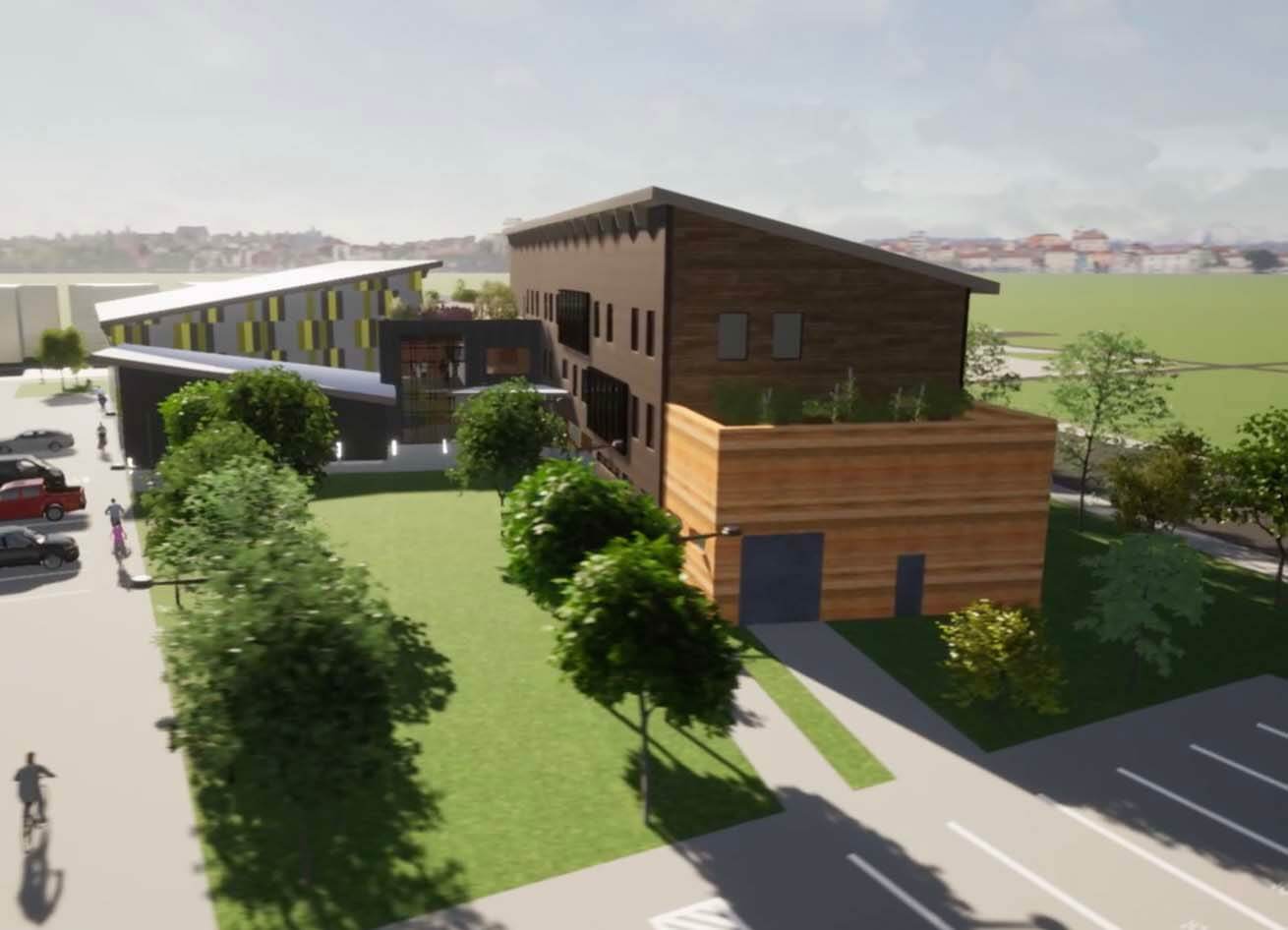
Community memory stays; carbon stays out of the air
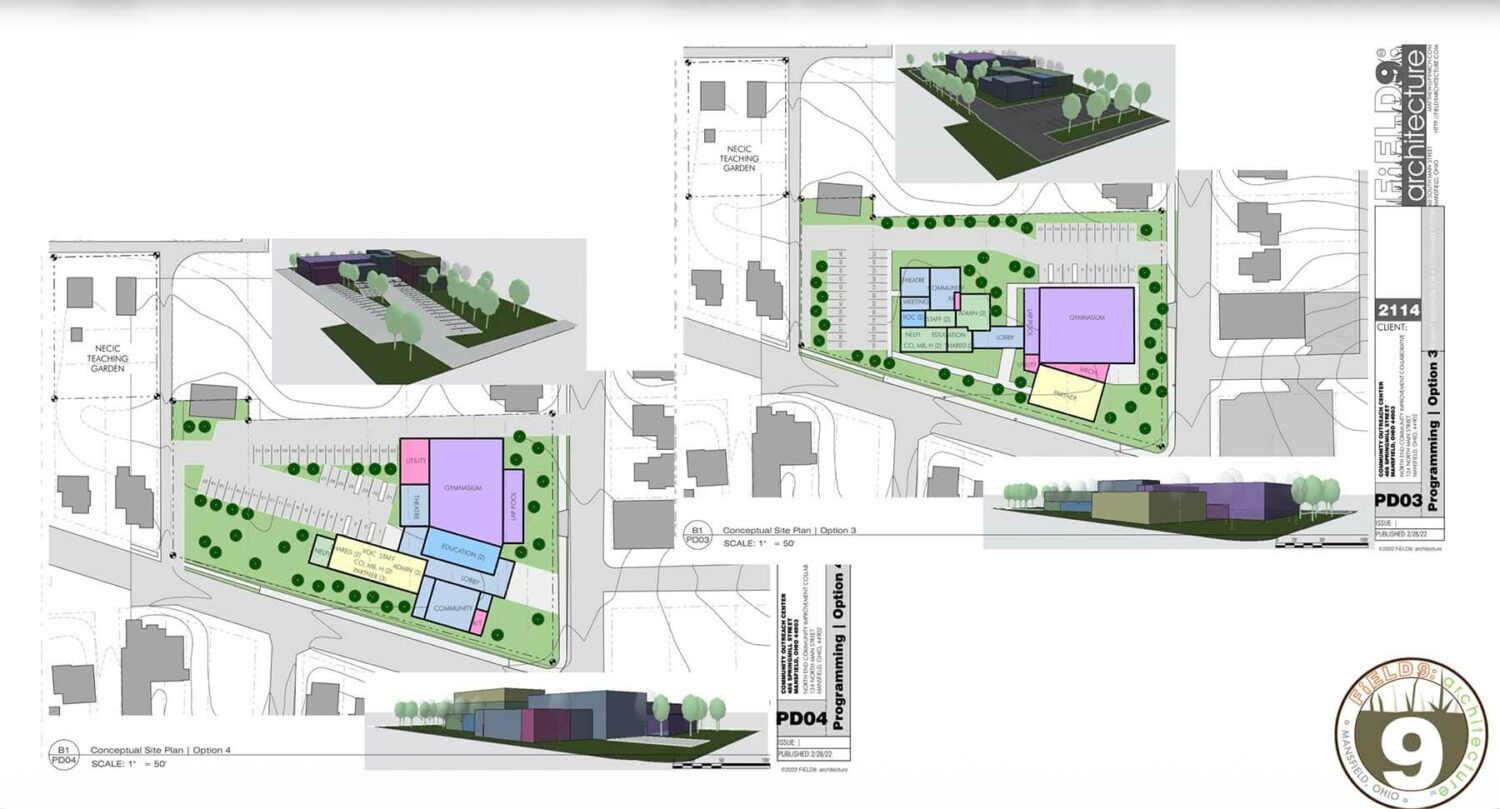
One answer was already waiting on Springmill Street—the former bank building that NECIC acquired to be physically embedded in the neighborhood. It sat within walking distance of 85% of the residents NECIC served.
Staff called that shift essential to the mission. The building “is in the heart of the North End,” with room for parking, access to the teaching gardens, and the visibility to “place heart back into community.”
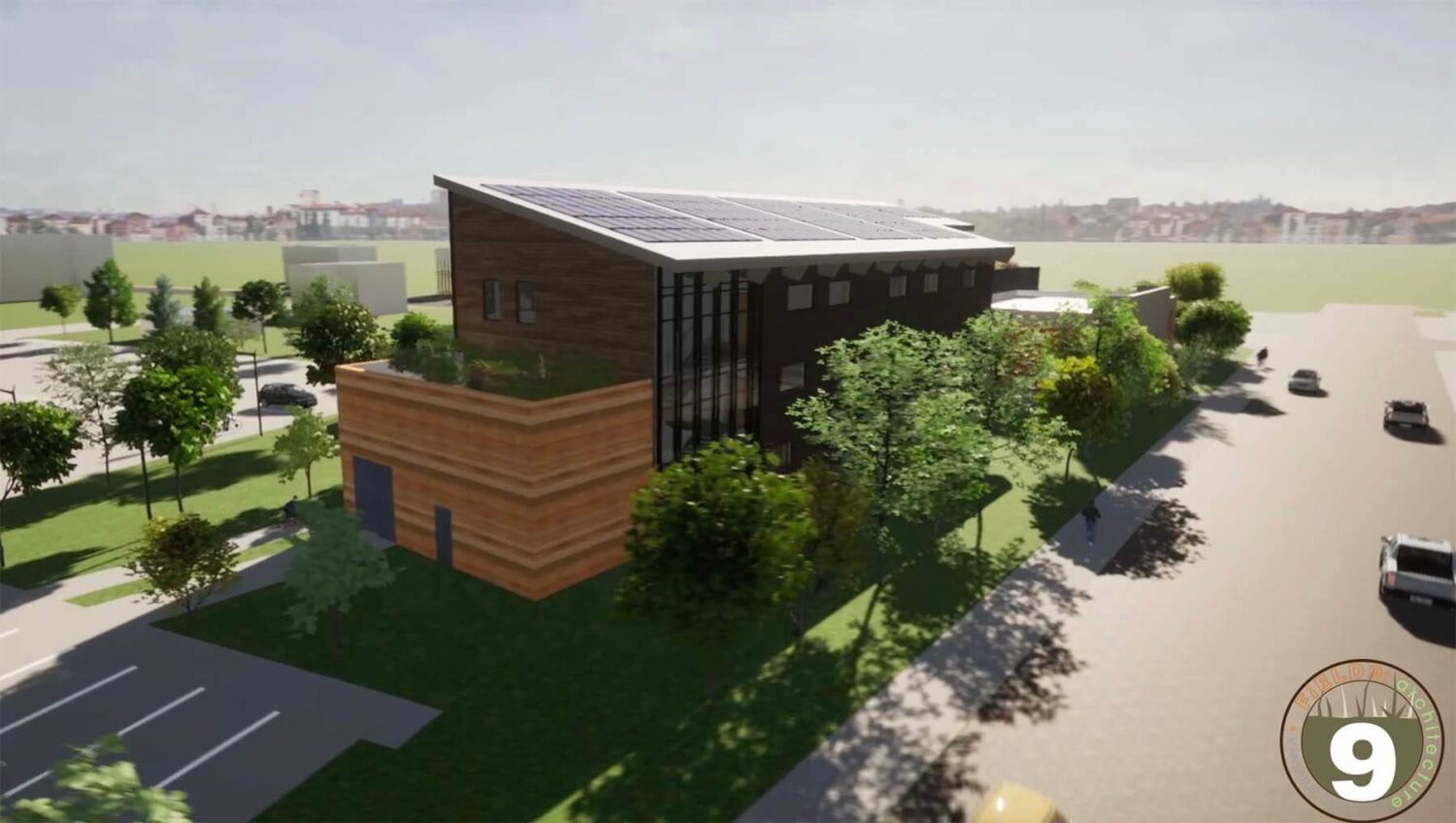
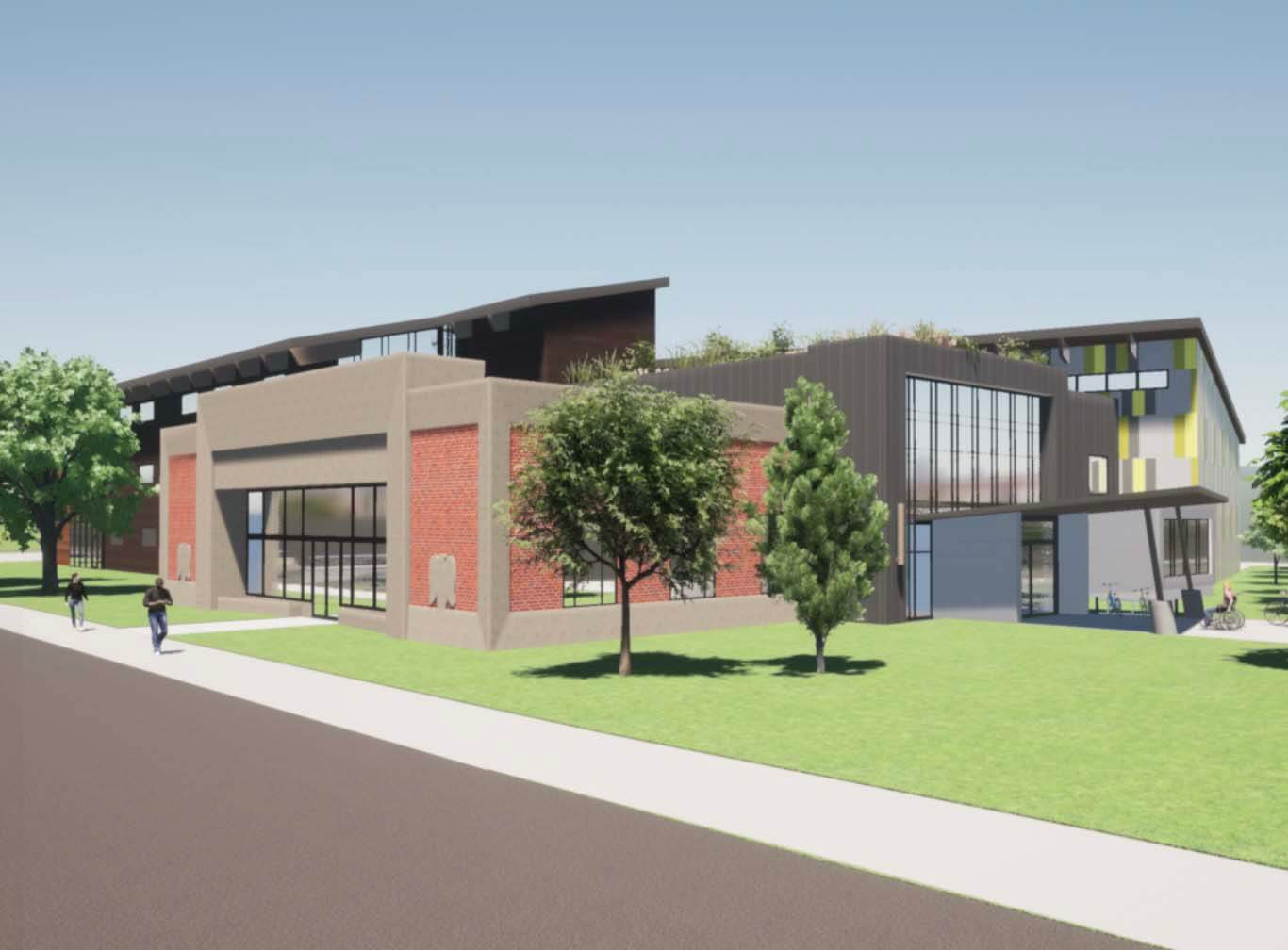
Preserving the brick structure did more than protect memories—it prevented tons of embodied carbon from entering the waste stream. For expansion, the FiELD 9 team selected mass timber, a structural system that stores carbon rather than emitting it, creating a warm, non-institutional interior.
And the systems? All-electric. Heat pumps instead of combustion fuels. Induction instead of gas. Dedicated, filtered ventilation for healthy indoor air.
Passive standards were projected to reduce operating costs by 75%—money redirected to services, not energy.
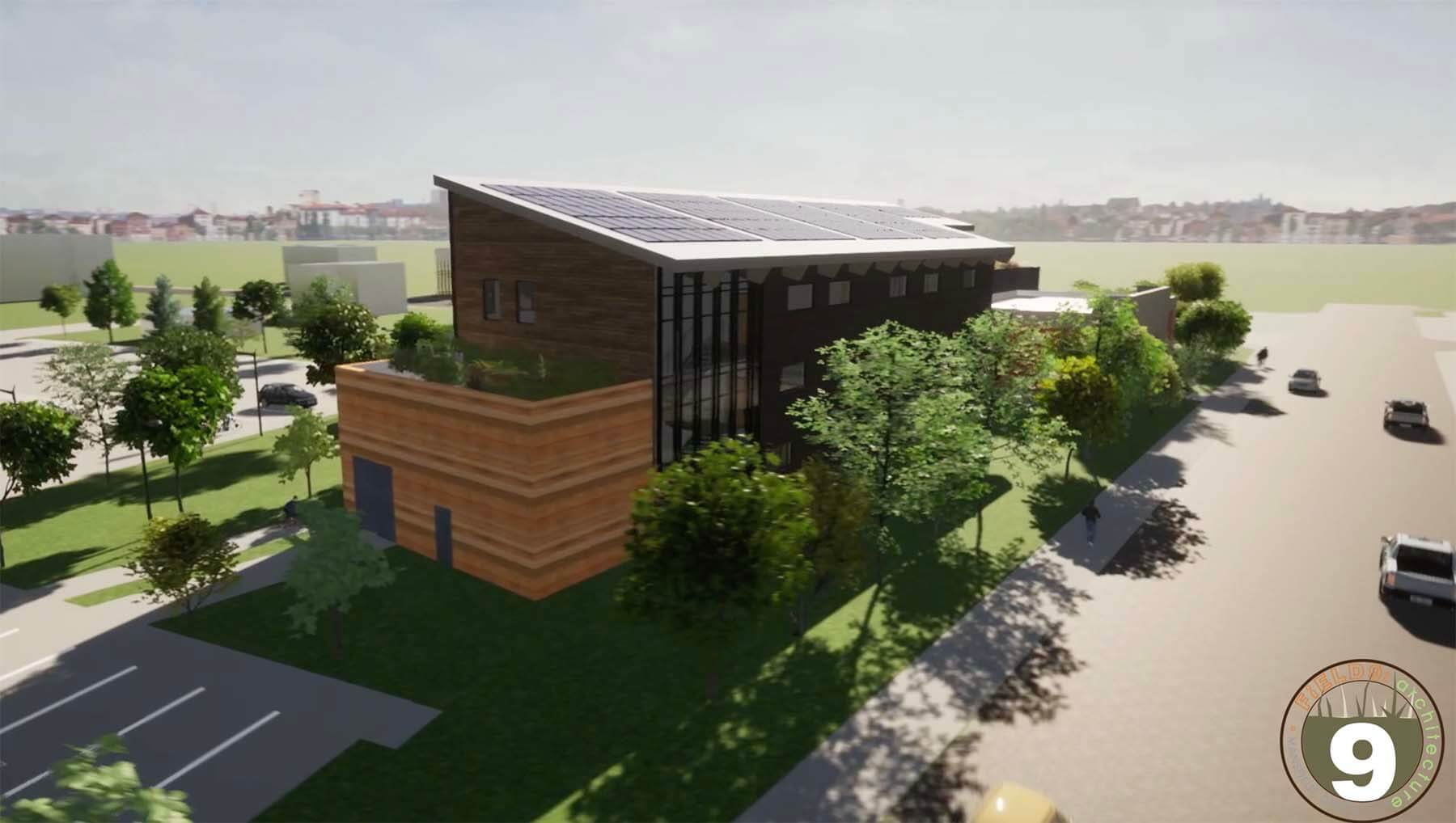
Rebuilding a commons is rebuilding power
The Community Impact Center was planned at 36,000 square feet—3,300 of it in the restored bank building, and 32,000 in new timber construction. The spaces reflected what community members asked for: a gym, theatre, community rooms, commercial kitchen, podcast/recording studio, e-sports lab, art studios, a medical clinic and counseling rooms.
The Community Impact Center vision was about a working building for real lives—elders seeking resources, kids looking for somewhere safe after school, parents seeking mental health support and teens needing someplace to belong.
Its design was around having a place where learning labs, counseling rooms, community cafés, computer labs, gardens, performance spaces and training programs could exist under one roof.
A space meant to keep utility costs low, air clean, and gives the community control of its physical destiny.
And it was set to be in the neighborhood, where people could walk, gather, advocate, argue, play, create and imagine.
The North End wrote the vision.
NECIC carried the weight.
FiELD 9 put design in service to the people.
**As of early 2026, funding has still not come through for the construction of the project.
And the neighborhood gets back what it should never have lost: a public home—built for them, by them, and with their future in mind.